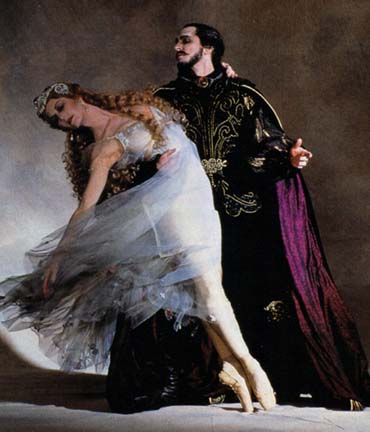
After the last post in which Viscount X noted his completion of the book Dracula, he survived the evening without any significant disturbance from bats, wolves, or vampires. Nevertheless, before he leaves the topic of Dracula, he must put down some thoughts about the nature of the undead and the particular meaning of the undead during that particular time and place.
Much has been written about the metaphors in Dracula: the blood, the stakes, and the garlic. However, one wonders about the largest metaphor of all, Dracula himself. What did he symbolize during that era? He lives an existence that is somewhat solitary. He performs much of his own toilet and housekeeping, although he lives with several animal-like women he occasionally feeds small children. Thus, they are not especially helpful to him in the mundane tasks of dusting or general picking up. The castle is filthy and smelly. It is entirely unwholesome.
One is left with the feeling of great loneliness. He comes to England alone, he destroys many of the people he hypnotizes to help him, and he leaves behind the women with whom he has lived. One wonders why he even left Romania. Was it to make friends? This is one of the motivations that is lacking in detail in the book. The Viscount likes to think that he was tired of the frontier and the lack of sparkling society. He was surrounded by wilderness and relatively uneducated peasants. Like Jude the Obscure, he saw over the hills to the next town and he wanted more out of his life.
But what of his life? He could only be out of his coffin during evening hours. How frustrating it must be to have such little time for activity! By the time the Viscount would have prepared for the day and had his coffee, it would be time to think about returning to the tomb. This certainly must have added to his overall lack of good humor. In addition, it is difficult to imagine how Dracula would have had enough time to make his detailed last minute arrangements to leave England during the last crisis in his life given standard business hours of the time.
Somehow Dracula is an antique of sorts. His friends and family have long ago died and he remains a living memory in a scrubby corner of the world. Alone and relatively friendless, he is very much like Jude the Obscure in that he is destroyed by seeking to reach beyond his confines to the modern era. This brings forward the fact that this very romantic late-nineteenth century book is very much a modern book that speaks to the passing of so many things. The protagonists kill the living antique thereby destroying old ways and conventions. In doing so, they pave the way for modernity and scientism, for they refuse to make public the very papers that would demonstrate the reality of the supernatural.
In many ways, the Viscount thinks Dracula sets a starting point for understanding how scientism became the coat of arms of the 20th century. We see the protagonists' typewriters, phonographic recorders, cities, and the scientific method in stark contrast with the Count's castles, coffins, countryside, and capes. The protagonists kill the count thereby destroying the past and elevating modernity. But, in some ways, there is a sense of dread in the book. There are glimpses into how modernity could be damaged by the past through the corruption of Lucy and through the inability to cure mental illness. In this we learn that modernity is imperfect and we return to the ideals of love in the end. One of the protagonists, an American, dies for love, leaving the rest elevated in the remembrance of his chivalrous act.
The Viscount is moving on to Pride and Prejudice.


